
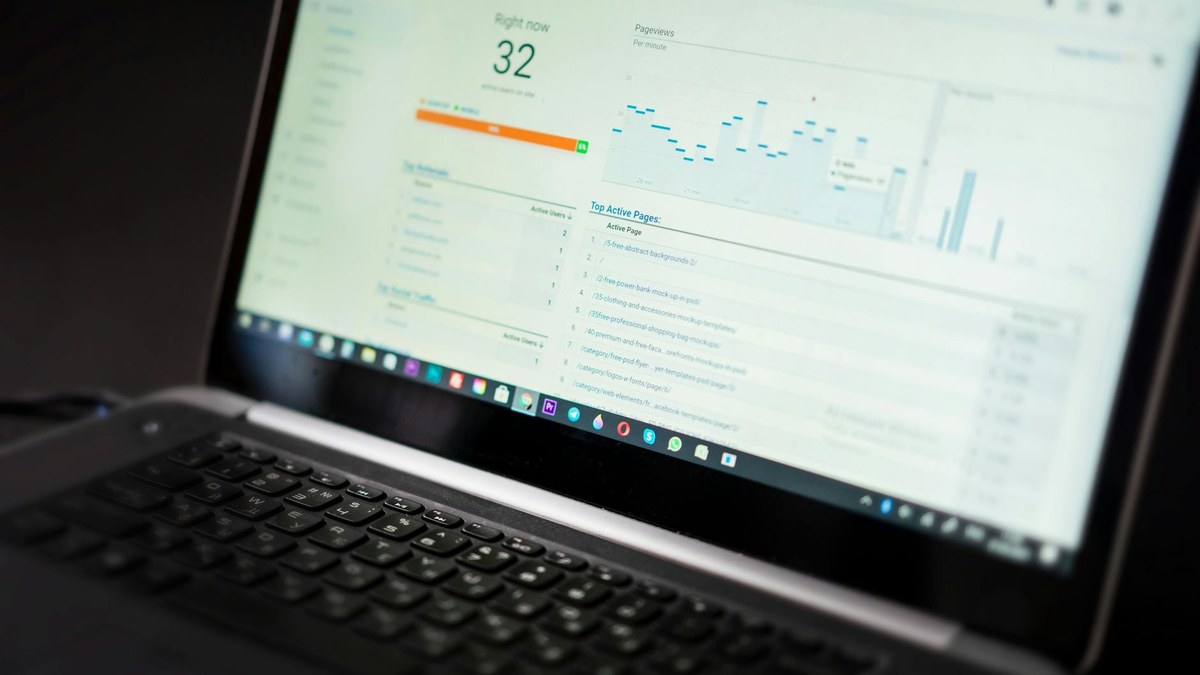
Most marketing dashboards were built by someone who wanted visibility, not by someone who wanted decisions. They are full of metrics that tell the marketing team what is happening on a day-to-day basis — impressions, clicks, sessions, open rates, follower growth — without providing the commercial context that would make those metrics meaningful to anyone outside the marketing function. The result is a dashboard that the team looks at daily and that leadership ignores, because the numbers on it do not connect to anything the board cares about.
The problem is not the data. It is the audience. A dashboard is only useful if it gives the right person the right information at the right level of granularity to make a specific decision. Most dashboards are built for one audience — typically the marketing team — and then presented to another audience — typically leadership — without the translation layer that would make them relevant. The metrics that help a campaign manager optimise ad spend in real time are not the metrics that help a CEO decide whether to increase the marketing budget next year.
Two audiences, two dashboards
Fixing the dashboard problem starts with acknowledging that different audiences need different views. A marketing operations dashboard — used daily or weekly by the team to manage execution — should show channel-level performance, cost per outcome by tactic, content engagement, lead volume by source, and campaign-level conversion rates. These metrics enable the team to make frequent, small decisions: adjust the bid, pause the underperforming ad set, prioritise a follow-up to a piece of content that is generating inbound enquiries.
A marketing leadership dashboard — reviewed monthly or quarterly by senior leadership — should show a small number of commercial metrics with trend lines: pipeline generated by marketing, marketing-attributed revenue, customer acquisition cost by channel, marketing efficiency ratio, and the leading indicators that predict future performance. The audience for this dashboard is not interested in individual campaign performance. They are interested in whether marketing is generating the commercial outcomes that justify the investment — and whether those outcomes are trending in the right direction.
The narrative that dashboards cannot provide
Even the best-designed dashboard cannot replace the narrative context that makes data meaningful to a non-specialist audience. A customer acquisition cost that has risen 15% in a quarter might indicate a problem, a strategic shift toward higher-quality leads, or a seasonal effect that reverses in the following quarter. The number alone does not tell the story. The marketing leader's job is to provide the context — in the meeting, in the accompanying commentary, in the recommended action — that turns the data into a useful input for a commercial decision.
A dashboard that shows everything tells leadership nothing. The discipline of deciding what not to show is what makes a dashboard useful.
The metrics that belong on a leadership dashboard
The metrics on a leadership dashboard should pass one test: could a decision be made on the basis of this metric moving significantly in either direction? If a metric going up by 30% or down by 30% would not trigger a board-level conversation or a strategic decision, it should not be on the leadership dashboard. It belongs in the operational view, where it is useful for execution management rather than strategic governance.
The metrics that typically pass this test for a B2B marketing function are: marketing-attributed pipeline as a percentage of total pipeline, marketing-attributed revenue versus plan, cost per qualified opportunity by channel, marketing efficiency ratio (revenue generated per pound of marketing spend), and one or two leading indicators specific to the business — such as organic search traffic trends, email list growth rate, or brand search volume — that the team has agreed are predictive of future commercial performance.
Frequency determines format
Dashboard frequency should match decision frequency. Operational dashboards used to manage day-to-day execution can be updated in real time. Leadership dashboards reviewed in monthly or quarterly business reviews do not benefit from daily refresh — the noise of daily fluctuation obscures the trends that monthly reporting is designed to surface. Designing dashboards around the cadence at which decisions will actually be made, rather than around the maximum data freshness available, produces reporting that is significantly more useful and significantly less confusing.
Rebuilding your dashboard with the decision in mind
The most efficient way to redesign a marketing dashboard is to start not with the available data, but with the questions the audience is trying to answer. For a leadership audience: is marketing generating enough qualified pipeline to hit the revenue plan? Is the cost of acquiring a customer trending up or down? Are there early signals that performance is likely to improve or deteriorate in the coming quarter? Design the dashboard to answer those questions, and only those questions, for that audience. Remove everything else from the leadership view.
The metrics you remove are not discarded. They belong in the operational dashboard, where they inform execution decisions rather than governance conversations. Both views are necessary. The mistake is showing the operational view to the governance audience and wondering why they are not making better decisions with it.